



Why Bitcoin and Ethereum ETFs Are Struggling Right Now
Lately, Bitcoin and Ethereum ETFs have been taking a hit, and a lot of investors are asking, “What’s going on?” Sure, the crypto market is always up and down, but this latest slide isn’t just about wild price swings. There’s more happening behind the scenes, especially when it comes to big-picture economics and how institutions are thinking about risk.
Let’s break down what’s really dragging Bitcoin and Ethereum ETFs right now, and what it means for the whole crypto space.
Sponsored
Sponsored
- Big Economic Shifts and Interest Rates
Here’s the thing: the macro environment has changed. Inflation cooled off for a while, and everyone started hoping for interest rate cuts. Those cuts haven’t shown up as fast as people wanted. When rates stay high, investors get more cautious. They start swapping out riskier stuff like crypto for safer bets with better yields. Bitcoin and Ethereum—often seen as “risk-on” trades—get caught in the crossfire.
ETFs that track BTC and ETH feel the heat because big investors rebalance their portfolios based on these bigger trends. When cash looks better sitting in a bond or a money market fund, it tends to leave riskier corners like crypto ETFs.
- Weak Performance from Bitcoin and Ethereum Prices
Let’s not forget the basics: these ETFs follow the actual coins. Lately, Bitcoin’s struggled to push past key resistance levels, and Ethereum hasn’t fared much better. That kind of price action kills excitement. When the coins go sideways or slip, the ETFs bleed too. If traders start unwinding leverage or betting against the market, the pain gets worse.
- Money Moving Back to Traditional Assets
Big investors don’t just park money in crypto; they’re constantly weighing options. Lately, stocks—especially in boring-but-steady sectors like utilities and financials—have started to look more appealing. So money’s rotating out of high-risk bets like Bitcoin and Ethereum ETFs and back into traditional assets. When that happens, it’s not just a trickle. Selling picks up, and ETF prices slide.
Sponsored
Sponsored
- Profit-Taking and ETF Outflows
Once those ETFs got the green light, investors piled in and rode the rally. Now, some of those early buyers are cashing out, locking in profits, and hunting for safer ground. Even if Bitcoin and Ethereum prices aren’t crashing, people selling their ETF shares push prices down and weigh on market mood.
- Regulatory Jitters
Crypto rules are still a moving target, especially in places like the US and Europe. Sure, ETFs are regulated, but new questions pop up all the time—about taxes, custody, or what counts as a security. When the regulatory fog gets thicker, big investors tend to pull back from anything that feels risky, and that means less appetite for crypto ETFs.
- Chasing Yield Elsewhere
Finally, there’s more competition for investor dollars. New products—like DeFi yield vaults, tokenized bonds, or other digital assets—promise payouts, not just price speculation. Some investors would rather chase yield than ride out crypto’s wild swings. So money leaves ETFs and heads for those alternatives.
Institutional investors appear to be trimming exposure to crowded US growth trades — including crypto — and reallocating to cheaper overseas markets amid improving macro conditions abroad.
Meanwhile, stronger US jobs data pushed Treasury yields higher. Higher yields tighten financial conditions and increase the attractiveness of bonds relative to risk assets.
Bitcoin and Ethereum, which trade as high-beta liquidity plays, tend to weaken when capital moves toward safer or yield-generating assets.
The combination creates a structural headwind.
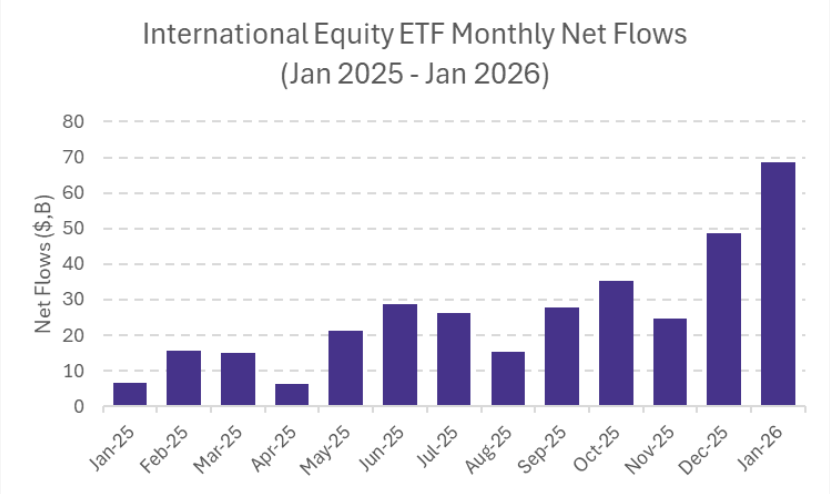
Crypto ETFs were a major source of demand in 2024, amplifying upward price moves through sustained inflows.
Now that mechanism is reversing. Instead of reinforcing rallies, ETFs are acting as distribution channels.
This does not invalidate the long-term crypto thesis. However, it weakens the short-term liquidity backdrop.
Until capital rotation slows or macro conditions ease, ETF outflows may continue to weigh on Bitcoin, Ethereum, and the broader crypto market.